Tonight’s Supermoon Is Real. Why Does It Look So Big Near the Horizon?
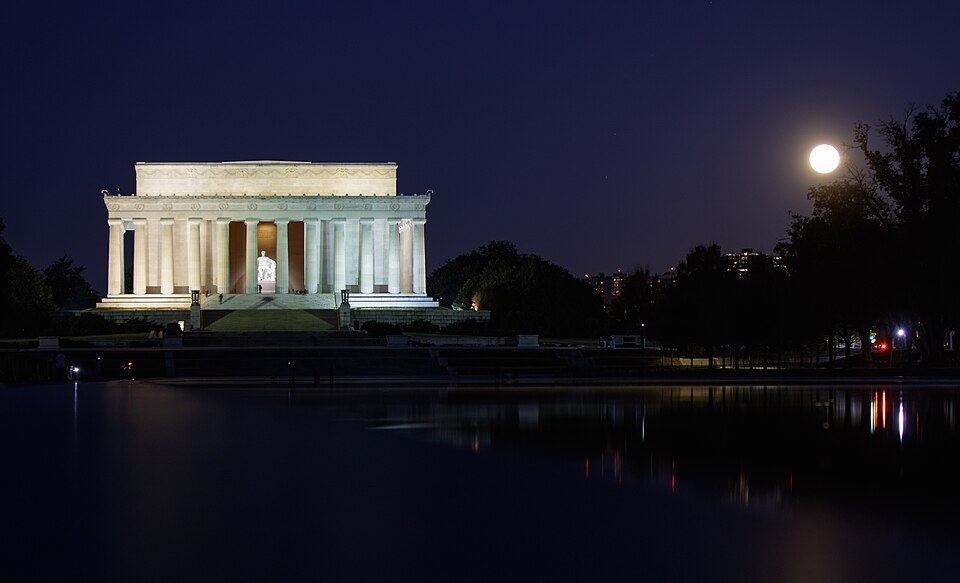
If you step outside on November 24 and the Moon looks too big for the neighborhood, you are seeing two things at once. This full Moon occurs near the close part of its orbit, so its apparent size really does increase. The enormous-looking Moon near the rooftops also has something to do with how we perceive it. NASA lists the full phase at 14:54 UTC, or 15:54 in Warsaw. It still looks full around moonrise, when you can actually put it next to a building or a tree.
Two different kinds of bigger
The Moon follows an elliptical orbit. Near perigee, the point at which it is nearest Earth, it takes up a little more of the sky. That is the real size difference a supermoon can show. The horizon illusion is separate. A Moon low in the sky can seem much larger than the same Moon high overhead, even when photographs with the same focal length show similar sizes. If you read that a supermoon can look up to 14 percent bigger, keep track of what is being compared. NASA is comparing the close full Moon with a full Moon at the far end of its orbit.
How to take a picture you will actually keep
Find a foreground before the Moon rises: a roofline, a tree, or a familiar bit of skyline. Hold the phone steady and tap the Moon on screen. Lower the exposure if the disk becomes a blank white spot. A wide phone lens will leave the Moon small in the frame, so let the landscape tell part of the story. If your phone has a genuine telephoto lens, give it a try from a stable position. Then take a second photo later without changing the zoom. Compare the disk sizes and see how different they felt while you were looking at them.

