Why Acadia’s Carriage Roads Have Teeth
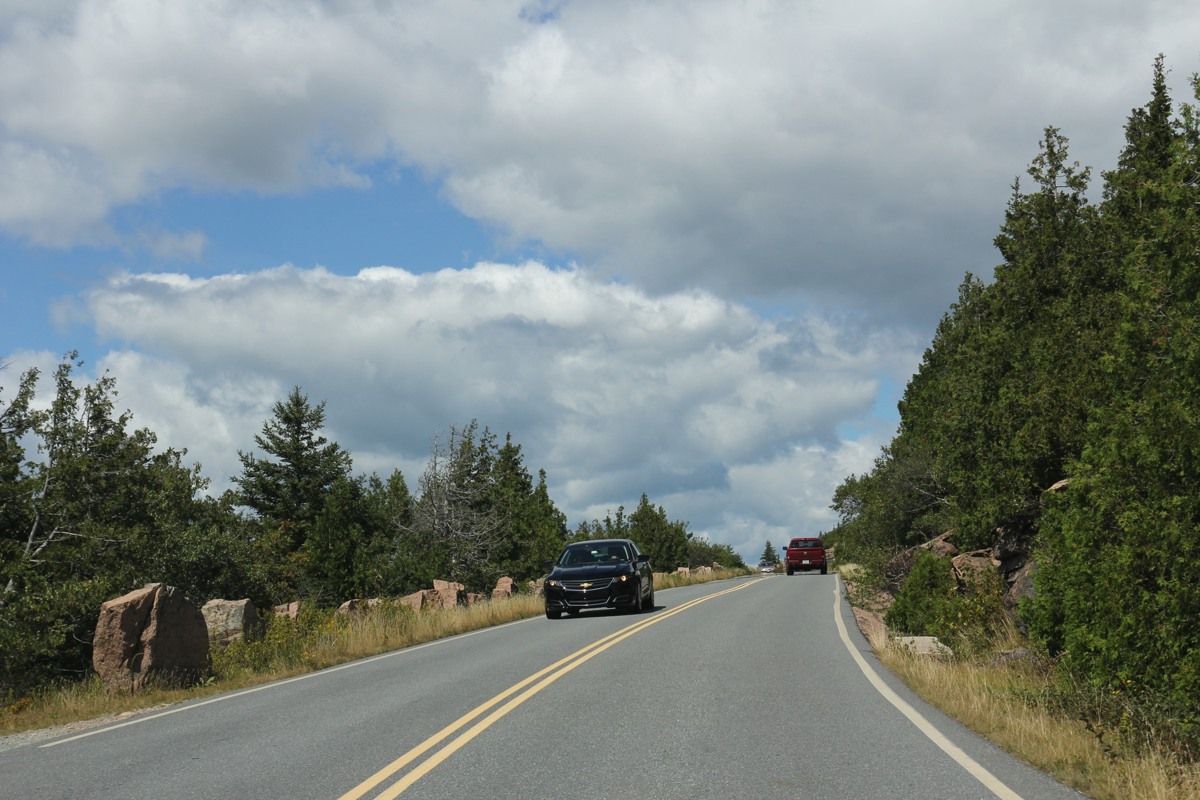
If you were asked to draw a guardrail from memory, you might sketch a ribbon of metal bolted to posts. On Mount Desert Island in Maine, you could draw a row of crooked teeth and get the answer right. The granite blocks at the edges of Acadia’s carriage roads earned the nickname “Rockefeller’s teeth.” Their uneven spacing is part of what makes them easy to mistake for scenery.
Look over the edge
Where a road passes above a retaining wall, there’s a good reason to mark exactly where the surface ends. The builders had granite on hand from the road work itself. Large blocks set along the outside made a visible boundary. The walls below did another job: they let a carriage follow the hillside without the builders having to shave the whole slope flat.
John D. Rockefeller Jr. wanted routes he could drive by horse and carriage. Construction stretched from 1913 to 1940. Today the park has 45 miles of these roads. A curve that feels gentle on a bicycle once had to make sense to someone holding reins.
The engineering you can feel underfoot
Stand near the center of a carriage road and look sideways. The surface rises toward the middle, a shape road builders call a crown. In Acadia the crown measured six to eight inches. It gave rain a way off the road and into roadside ditches. Underfoot, three layers of stone helped form the roadbed. The most memorable feature has a nickname, but the quiet rise beneath your shoes is worth a second look.
National Park Service history of the carriage roads and Acadia’s visitor guide.

