Your Job Got Automated. Here's a Side Quest.
According to The Wall Street Journal, Anthropic CEO Dario Amodei once floated an idea while working at OpenAI. Immersive video games might ease the political tensions that could follow AI-driven job losses.
Imagine the tutorial. Your character loses their job on Monday. By Tuesday, they’re running a farm, managing inventory and negotiating prices with three villagers. On Wednesday, the game congratulates them on discovering the joys of work.
The game lets you start over
You can take a risk, mess up and try again. You can spend an entire evening solving a problem and see exactly what changed because of it. A job search can take weeks and end with an automated email that starts with “Dear Candidate.”
A good game can give you a night off from that. Getting another night off is easy. Paying for the apartment where you play it is the hard part.
One small patch
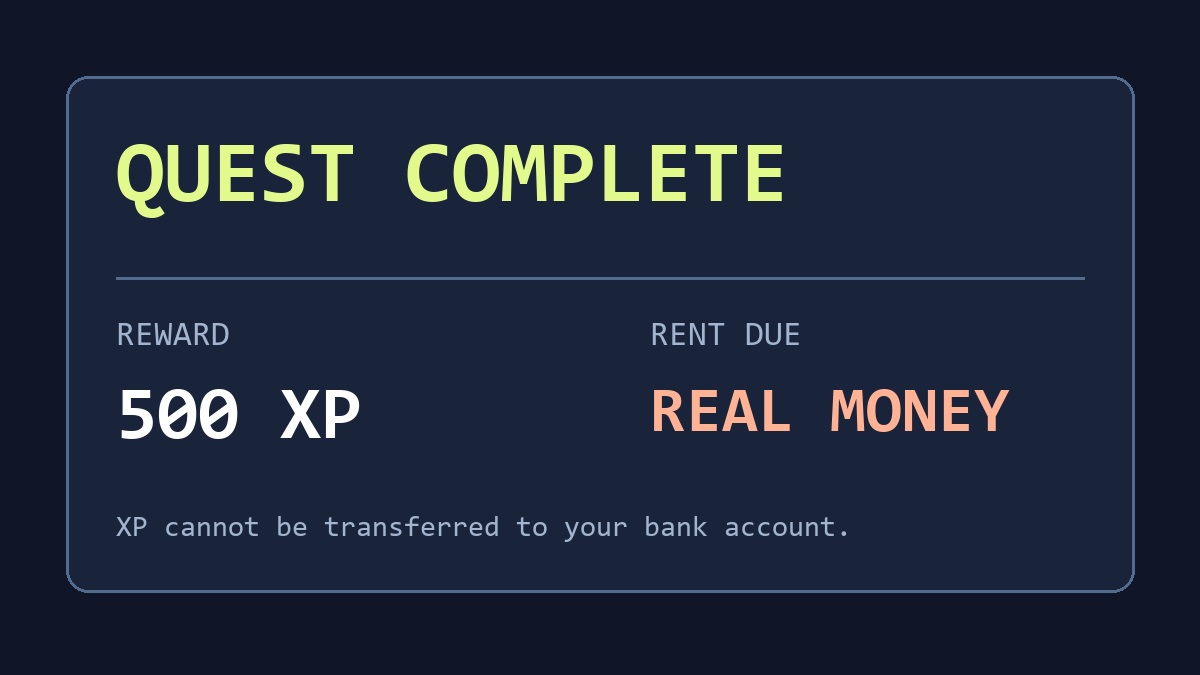
If we’re designing a game to get people through unemployment, I’d start with one feature. Every time the player finishes a quest, the reward goes straight into their bank account.
Congratulations. We’ve invented a job again.
What the tutorial leaves out
The fantasy of a good management game isn’t that you never have to work. It’s that you can see what your work did. Plant something and it grows. Run out of supplies and you know where they went. If you make a mistake, you can trace it. Now put that next to the experience of sending dozens of job applications into systems that rarely tell you whether a person saw them. Of course the farm is more satisfying.
A game can be comforting precisely because it gives you control over a small problem for an hour. You can set the pace. You can stop and come back tomorrow. That feeling is worth something. It also explains why the idea sounds so different depending on who is talking. From the player’s chair, it’s a welcome break. From the executive’s chair, talking about games before talking about income makes it sound as if the break is the whole plan.
What would make the next level playable?
Imagine a real transition with time to look for work, bills you can cover and training tied to jobs that actually exist. Then the evenings off might feel like evenings off again. For the game designers, here’s the difficult part. Build a system where doing useful work makes the player’s life a little easier, then try to make that system work outside the game.
